
Stay updated on our latest exhibition appearances, new product launches, and company developments as we continue to expand our presence in international fastener and machinery markets.
Article Summary: A screw cold heading machine is a core piece of equipment for manufacturers that need to produce large quantities of accurate, consistent, and mechanically reliable screws and fastener blanks. By forming metal through controlled plastic deformation rather than removing material through conventional cutting, cold heading can improve material utilization, production continuity, and dimensional consistency. This article explains how the process works, what factors influence machine selection, how manufacturers can reduce common production problems, and how YWC can support different screw and fastener manufacturing requirements.
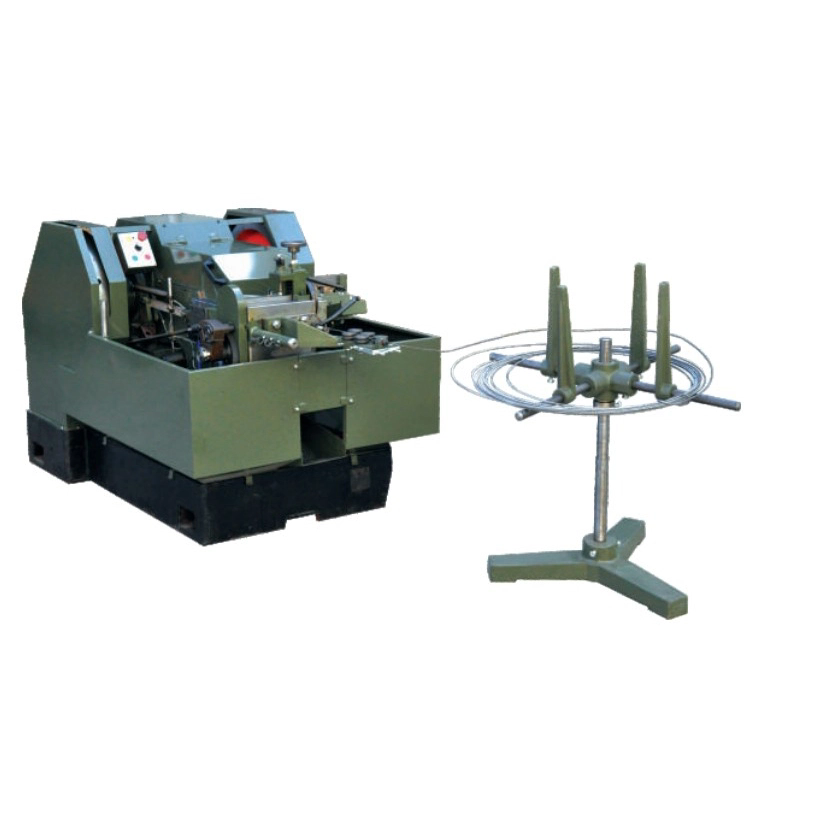
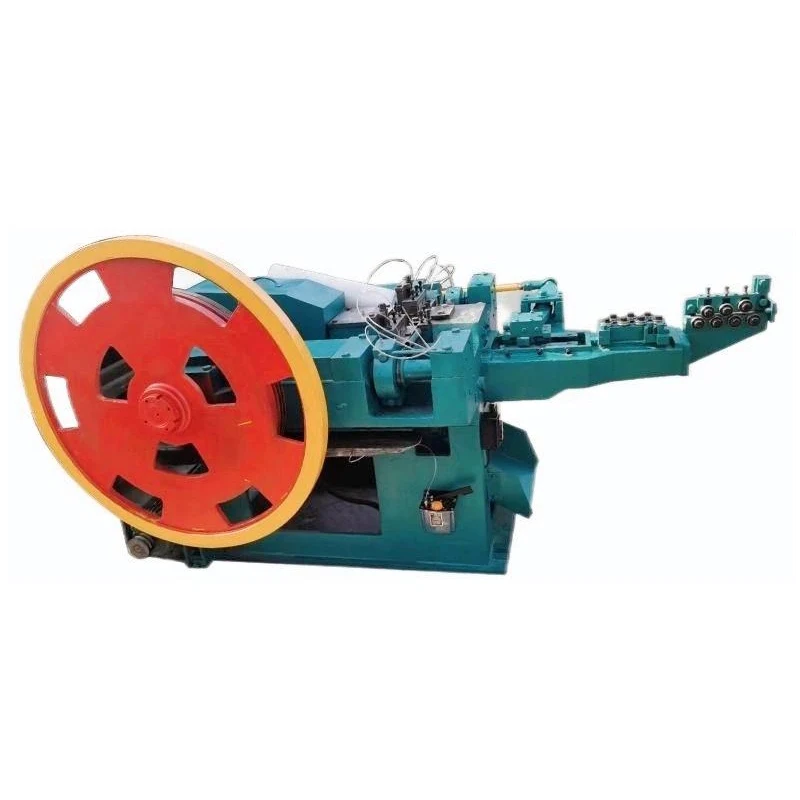
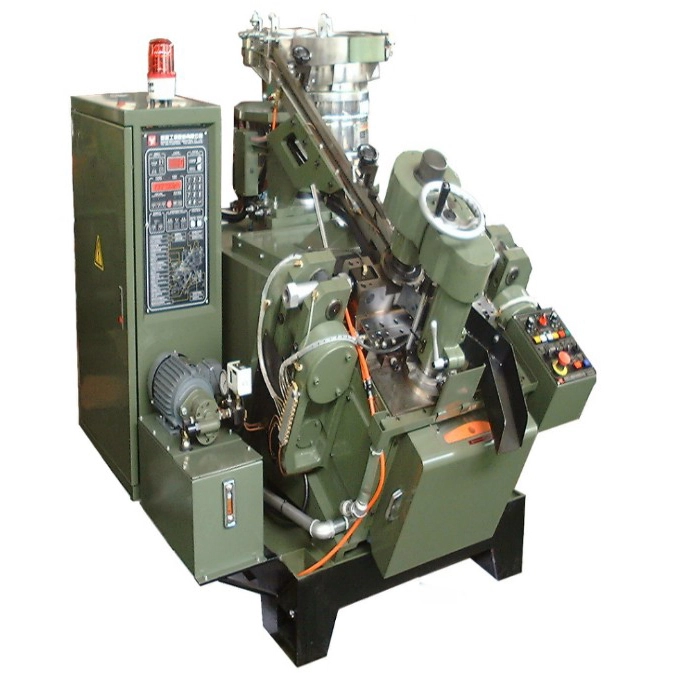
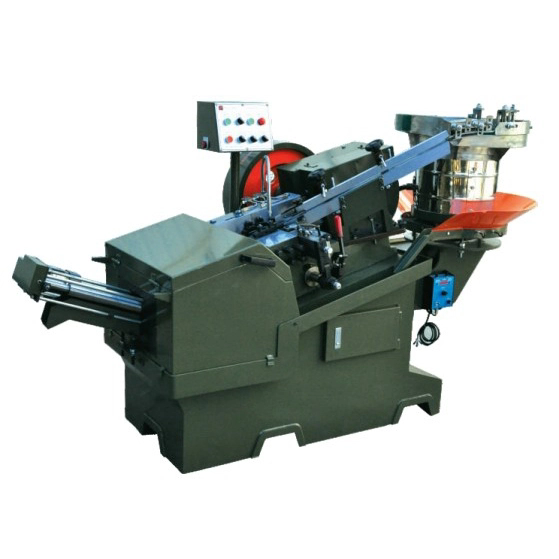
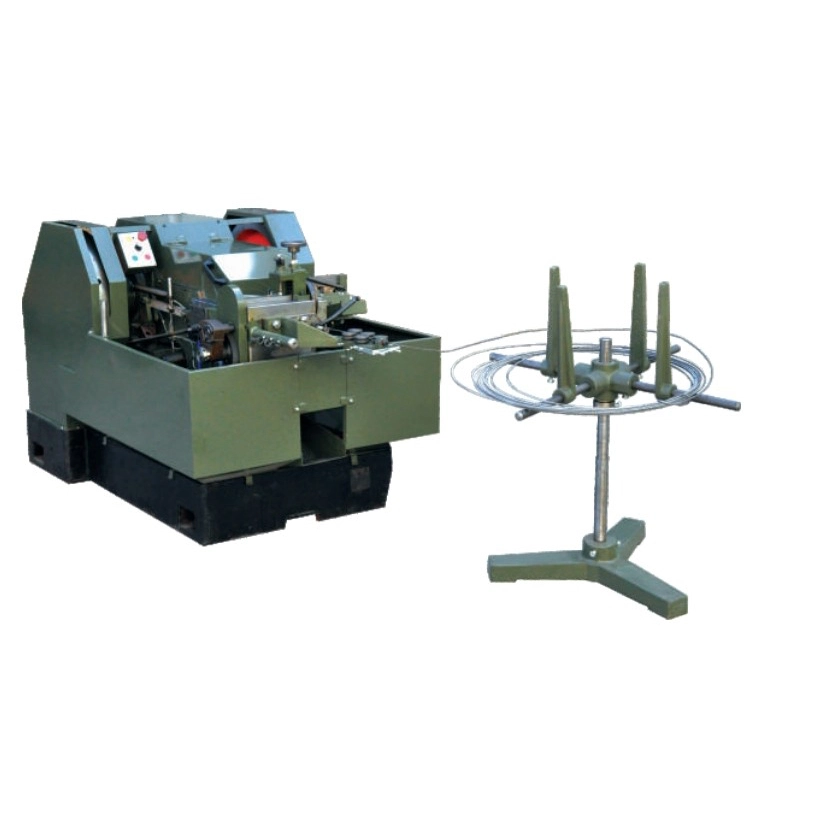
A Screw Cold Heading Machine forms metal wire into screw blanks by applying controlled mechanical force at or near room temperature. Instead of cutting away excess material to create the required geometry, the machine pushes and reshapes the incoming wire inside precision tooling.
This distinction is important for fastener manufacturers. A conventional machining process may begin with a larger piece of material and remove unwanted sections until the required shape is achieved. Cold heading takes a different approach: the material is displaced into the desired configuration.
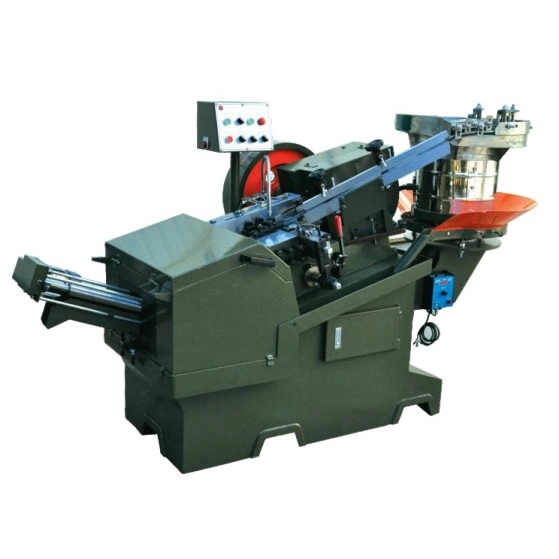
During operation, wire is continuously or intermittently fed into the forming system. The machine cuts a predetermined length of wire, positions the blank accurately, and uses punches and dies to create the head and other required features. Depending on the machine configuration and product design, multiple forming operations can be performed sequentially.
The result is a screw blank that can subsequently move to processes such as thread rolling, point forming, slotting, heat treatment, surface treatment, inspection, and packaging.
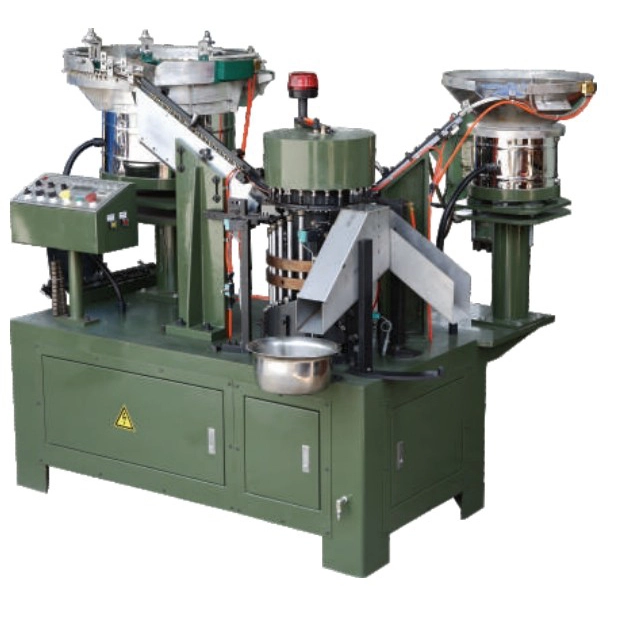
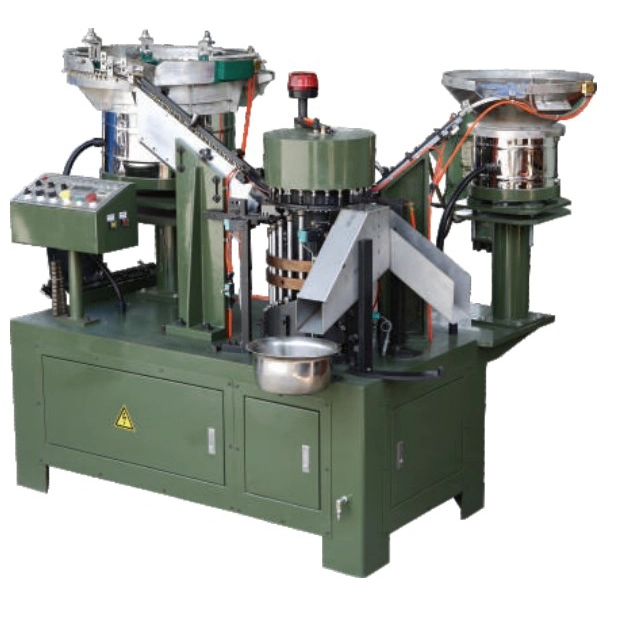
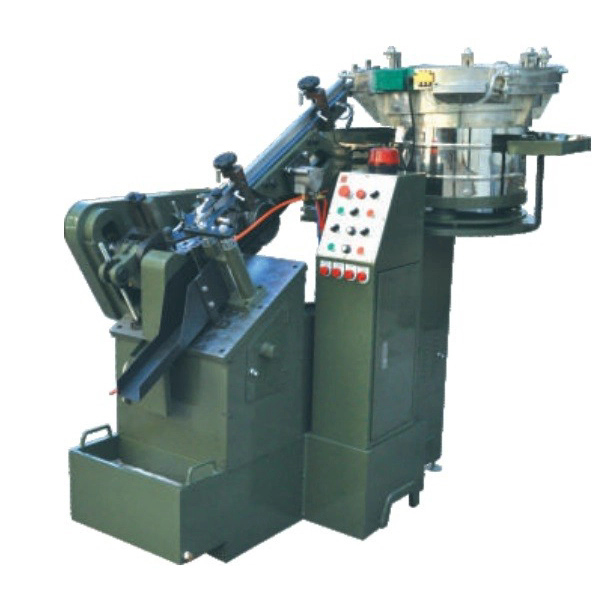
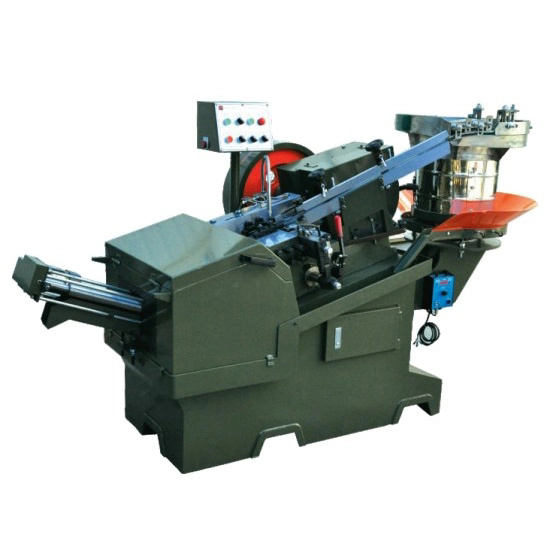
YWC develops screw-making equipment for manufacturers that require stable forming performance, production efficiency, and adaptability to different fastener specifications. The appropriate machine configuration depends on the material, dimensions, head geometry, production volume, and level of automation required.
The cold heading process is more than simply pressing wire into a die. Accurate screw production requires coordination between feeding, cutting, positioning, tooling, forming force, and discharge.
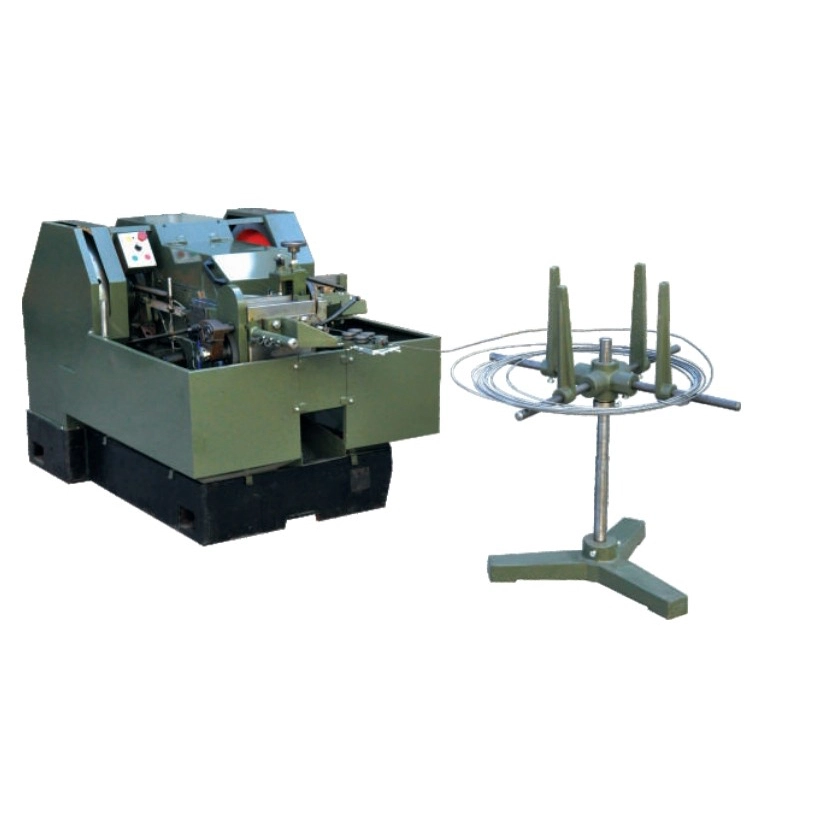
Production begins with a suitable coil or wire stock. The feeding mechanism delivers the material into the forming area at a controlled rate.
Stable feeding is essential because inconsistent wire positioning can affect the volume of material entering the die. Even when the forming tools are accurately manufactured, an unstable feeding system can produce dimensional variation.
The incoming wire is cut into predetermined blanks. The blank length must correspond closely to the material volume required for the finished head and shank geometry.
Incorrect blank length can create several problems:
The cut blank must reach the forming station in the correct orientation and position. In high-volume production, reliable transfer becomes particularly important because thousands or millions of repeated cycles leave little room for accumulated positioning errors.
The punch forces the blank into the die cavity. The metal undergoes plastic deformation and flows into the available space.
This stage determines much of the screw head geometry. Depending on the product design, several forming stages may be used to gradually create complicated shapes instead of attempting to complete the entire geometry in one excessive operation.
After forming, the screw blank is removed from the tooling and transferred to the next production stage. Automated discharge helps maintain a continuous manufacturing cycle while reducing manual handling.
| Production Stage | Primary Function | Common Quality Concern |
|---|---|---|
| Wire feeding | Deliver material consistently | Feeding instability |
| Cutting | Create accurate blanks | Incorrect blank length |
| Positioning | Align the blank | Misalignment |
| Heading | Form the screw head | Cracks or incomplete filling |
| Discharge | Transfer finished blanks | Jamming or handling damage |
Fastener manufacturers often face the same fundamental challenges: high material consumption, slow cycle times, inconsistent dimensions, excessive labor requirements, and difficulty maintaining stable quality during large production runs.
A properly configured screw cold heading machine can address many of these issues at their source.
Because the process reshapes the material instead of primarily removing it, cold heading can achieve considerably better material utilization than many subtractive manufacturing methods.
For high-volume screw production, even a small reduction in material loss can have a meaningful effect on manufacturing cost. This becomes particularly important when using relatively expensive stainless steel or alloy materials.
Automated cold heading equipment is designed for repetitive manufacturing. Once feeding, tooling, and process parameters have been properly established, the machine can maintain a consistent production rhythm with limited operator intervention.
Cold forming can preserve and redirect the metal's grain flow rather than cutting through the material in the same way as conventional machining. This can contribute to useful mechanical characteristics in properly designed fasteners.
However, material behavior depends on alloy composition, forming conditions, reduction ratio, tooling design, lubrication, and subsequent heat treatment. Manufacturers should therefore validate the complete process rather than assuming that cold heading alone guarantees a particular mechanical property.
When feeding, forming, transfer, and discharge are automated, fewer manual operations are required. This can improve production consistency while allowing operators to focus on setup, inspection, process monitoring, and maintenance.
The suitable material depends heavily on the required screw specification and the forming capability of the selected machine and tooling.
Common fastener materials include:
Material selection should not be separated from machine selection. A material with higher strength or lower ductility can impose greater demands on the forming system and dies.
For example, stainless steel fasteners may require particularly careful control of forming conditions because excessive deformation or inappropriate tooling can contribute to cracking and accelerated die wear.
High-quality screw production requires more than purchasing a high-performance machine. The entire forming system must be balanced.
Blank volume is fundamental to heading accuracy. The wire diameter and cut length should provide enough material to fill the required geometry without generating unnecessary excess.
Dies and punches directly determine the final shape of the formed component. Poorly designed tooling can cause uneven material flow, premature wear, surface defects, or unstable dimensions.
Tooling should therefore be selected according to:
Lubrication affects friction, material flow, tool life, and surface quality. Insufficient lubrication can increase forming resistance and tool wear, while inappropriate lubrication can create contamination or process instability.
Operators should monitor production data rather than waiting until a large batch has already developed defects. Changes in noise, vibration, forming force, temperature, or dimensional measurements can provide early indications of developing problems.
Even a well-designed machine cannot completely compensate for inconsistent incoming wire. Diameter variation, surface defects, unsuitable material properties, or inconsistent lubrication can affect the forming process.
Selecting a machine based only on maximum theoretical output can lead to an unsuitable investment. The machine should be evaluated according to the actual fastener portfolio and production strategy.
| Selection Factor | Why It Matters | Questions to Ask |
|---|---|---|
| Fastener dimensions | Determines forming capacity | What diameter and length range is required? |
| Head design | Influences tooling and forming stages | Is the head standard or customized? |
| Material | Affects forming force and die life | Which steel or alloy will be processed? |
| Production volume | Determines automation requirements | What is the required output per shift? |
| Product variety | Influences changeover requirements | How frequently will specifications change? |
| Downstream equipment | Determines line compatibility | Will thread rolling or other machines follow heading? |
Manufacturers should also consider the availability of technical support, spare parts, tooling assistance, commissioning support, and operator training. These factors can have a substantial effect on the actual lifetime value of industrial equipment.
YWC provides screw cold heading solutions for different fastener production requirements and can configure equipment according to product specifications, material characteristics, and production objectives.
Automation becomes increasingly valuable as production volume increases.
A modern automated screw manufacturing workflow may include:
Connecting these processes can reduce the gaps between individual operations. Instead of moving semi-finished products manually from one machine to another, manufacturers can establish a more continuous production flow.
This approach can be particularly beneficial for factories facing labor shortages, increasing order volumes, or strict requirements for repeatability.
YWC also offers integrated screw production line solutions that can combine forming with downstream processes. The exact configuration should be selected according to the fastener design and required production capacity.
Cold-headed fasteners are used across a wide range of industries because screws and related components are fundamental to mechanical assembly.
The required machine configuration changes significantly between miniature electronic screws and larger engineering fasteners. This is why product geometry and target production volume should be established before selecting equipment.
Preventive maintenance is essential for maintaining consistent forming quality. Cold heading equipment operates under repeated mechanical loads, so small problems can become significant if they are ignored.
A practical maintenance program should include:
Maintenance should be based on both operating time and actual machine condition. If a machine produces increasingly inconsistent heads, requires frequent adjustments, or experiences repeated tooling failures, simply replacing individual components may not solve the underlying issue.
Root-cause analysis should examine the complete forming system, including material, blank length, tooling, lubrication, machine settings, and transfer accuracy.
A Screw Cold Heading Machine is industrial equipment used to form metal wire into screw blanks through controlled plastic deformation. It is widely used for high-volume production of screws, bolts, rivets, and other fastener components.
Cold heading reshapes metal through plastic deformation, while machining generally removes material through cutting. Cold heading can therefore provide better material utilization and is particularly suitable for repetitive high-volume fastener manufacturing.
Yes. With appropriate punches, dies, forming sequences, and machine settings, cold heading equipment can produce many customized screw and fastener geometries. The feasibility depends on the dimensions, material, head design, and forming ratio of the product.
Yes. Stainless steel can be cold headed when the machine, tooling, lubrication, material condition, and forming sequence are properly matched. Production parameters should be validated for the specific stainless steel grade and screw geometry.
Not normally. Cold heading primarily creates the screw blank and head geometry. Thread rolling is commonly used afterward to form the external thread, although the exact downstream process depends on the finished fastener design.
Start by controlling raw material quality, blank length, die and punch condition, lubrication, forming parameters, and transfer accuracy. Consistent inspection and preventive maintenance are also important for identifying problems before they affect large production batches.
It can be, but the economic benefit depends on changeover frequency, product variety, production volume, and automation requirements. Manufacturers with frequent specification changes should pay particular attention to setup time and tooling changeover efficiency.
Useful information includes screw drawings, material grade, wire diameter, finished dimensions, head type, expected production volume, target cycle rate, required tolerances, and downstream processes. Detailed product information allows the machine configuration and tooling requirements to be evaluated more accurately.
A Screw Cold Heading Machine can become the foundation of an efficient fastener manufacturing operation when the equipment, material, tooling, and production process are properly matched. By forming screw blanks through controlled plastic deformation, manufacturers can reduce material loss, support continuous production, improve repeatability, and establish a more efficient route to large-volume fastener manufacturing.
However, choosing equipment should not be based on output speed alone. Product geometry, material characteristics, forming stages, tooling requirements, automation level, downstream processes, maintenance, and long-term technical support all influence the real performance of a production system.
YWC focuses on screw-making and cold heading equipment for fastener manufacturers with different production requirements. Whether the objective is standardized mass production, customized screw manufacturing, stainless steel fastener production, or a more integrated automated line, the right configuration should begin with the actual product and production targets.
Ready to improve your fastener production process? Share your screw specifications, material requirements, and expected production capacity with YWC to discuss a suitable cold heading solution. Contact us today to explore the right machine configuration for your production needs.